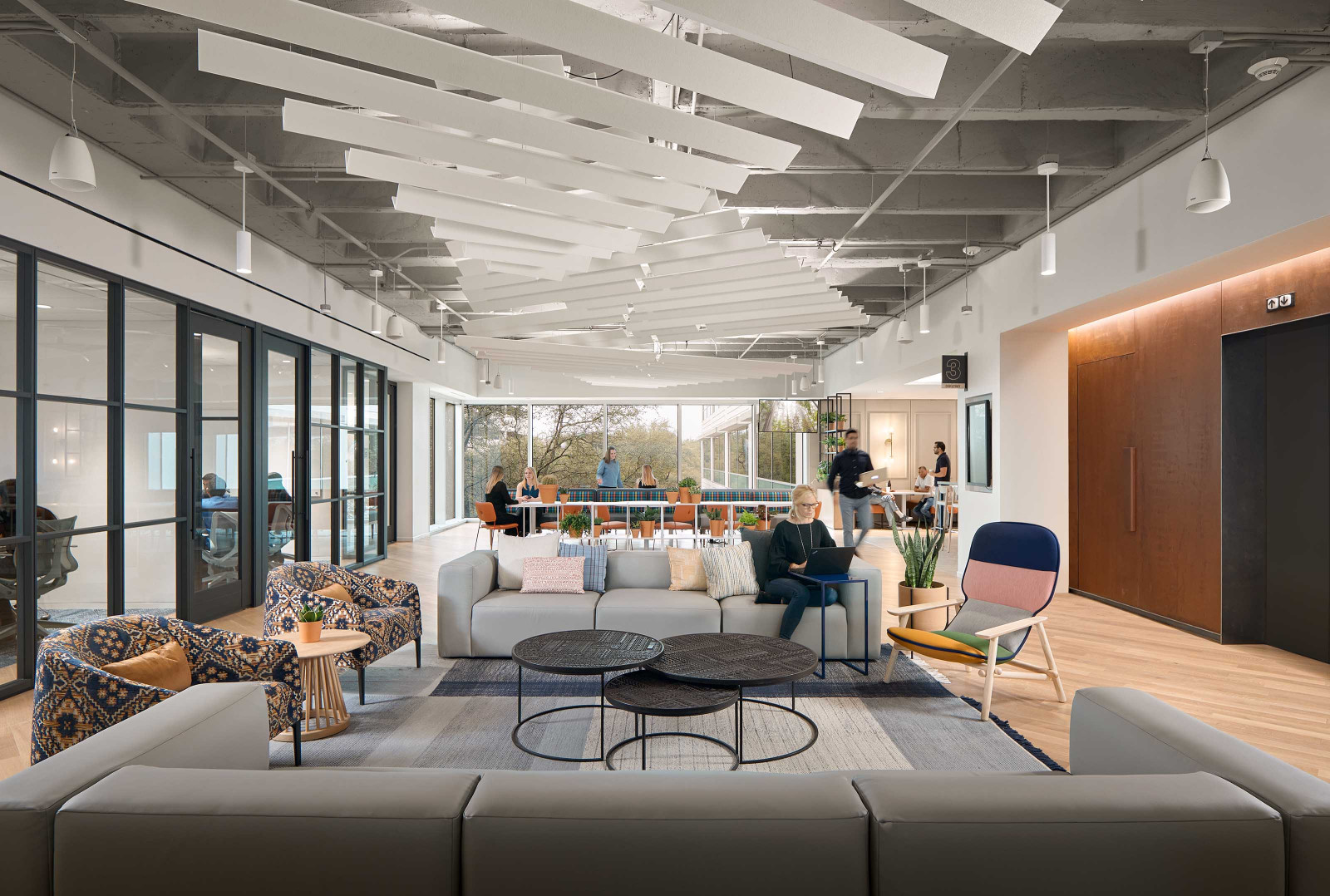
The office has fundamentally changed. It is no longer simply a place where work happens; it has become a strategic tool for attracting talent, building culture, and accelerating innovation. Five trends are defining how forward-thinking Southern companies are designing offices for 2026 and beyond.
1. The "Magnetic" Office
Mandatory office attendance is giving way to creating environments employees actively want to experience. Hospitality-inspired amenities (coffee bars, wellness rooms, outdoor terraces), community spaces (town halls, social hubs), and wellness-centric design (biophilic elements, air quality, natural light) are now baseline expectations — not premium features. Companies with magnetic offices report higher satisfaction and lower turnover.
2. Radical Flexibility
Beyond basic hybrid policies, leading organizations are creating dynamic environments: activity-based working zones (focus, collaboration, learning, social), hoteling systems, neighborhood-based team zones, and technology that ensures remote and in-office employees have equal voice. The successful hybrid workplace requires intentional design — not just a remote work policy.
3. Sustainability as the Default
ESG considerations now factor into virtually every real estate decision. Corporate carbon commitments are driving demand for LEED, WELL, and Fitwel certifications. Sustainable materials, energy efficiency, and renewable integration aren't just ethical choices — they reduce operating costs and enhance corporate reputation. In the Southeast specifically, energy-efficient design pays back faster than in cooler climates due to cooling-load economics.
4. The Data-Driven Workplace
Occupancy sensors, space utilization analytics, and AI-driven insights are replacing assumption-based design. Real-time data reveals how space is actually used — and where it isn't. Companies using occupancy data typically reduce real estate footprint by 15-25% while improving employee experience.
5. Experience-Driven Design
The shift from functional to memorable. Sensory design, brand-aligned storytelling through space, and Instagram-worthy moments that employees voluntarily share. The office is becoming an extension of the brand — visible to employees, candidates, customers, and partners.
How to Apply These Trends
Successful implementation requires a partner who can translate business objectives into workplace strategy, manage the complexity of integrating trends and technologies, and ensure accountability from all vendors. CIG's founder-led, independent approach is built for exactly this kind of strategic execution.
Schedule a workplace strategy consultation to apply these trends to your specific context.